

Quantum Computing Joins the Next Frontier in Genomics
The Sanger Institute, a world-leading research institute, has selected ³Ô¹ÏºÚÁÏÍø’s quantum computer to explore new solutions in complex genomics
- The Sanger Institute illustrates the value of quantum computing to genomics research
- ³Ô¹ÏºÚÁÏÍø supports developments in a field that promises to deliver a profound and positive societal impact
Twenty-five years ago, scientists accomplished a task likened to a biological : the sequencing of the entire human genome.
The Human Genome Project revealed a complete human blueprint comprising around 3 billion base pairs, the chemical building blocks of DNA. It led to breakthrough medical treatments, scientific discoveries, and a new understanding of the biological functions of our body.
Thanks to technological advances in the quarter-century since, what took 13 years and cost $2.7 billion then in under 12 minutes for a few hundred dollars. Improved instruments such as next-generation sequencers and a better understanding of the human genome – including the availability of a “reference genome� – have aided progress, alongside enormous advances in algorithms and computing power.
But even today, some genomic challenges remain so complex that they stretch beyond the capabilities of the most powerful classical computers operating in isolation. This has sparked a bold search for new computational paradigms, and in particular, quantum computing.
Quantum Challenge: Accepted
The is pioneering this new frontier. The program funds research to develop quantum algorithms that can overcome current computational bottlenecks. It aims to test the classical boundaries of computational genetics in the next 3-5 years.
One consortium – led by the University of Oxford and supported by prestigious partners including the Wellcome Sanger Institute, the Universities of Cambridge, Melbourne, and Kyiv Academic University – is taking a leading role.
“The overall goal of the team’s project is to perform a range of genomic processing tasks for the most complex and variable genomes and sequences – a task that can go beyond the capabilities of current classical computers� – Wellcome Sanger Institute , July 2025
Selecting ³Ô¹ÏºÚÁÏÍø
Earlier this year, the Sanger Institute selected ³Ô¹ÏºÚÁÏÍø as a technology partner in their bid to succeed in the Q4Bio challenge.
Our flagship quantum computer, System H2, has for many years led the field of commercially available systems for qubit fidelity and consistently holds the global record for Quantum Volume, currently benchmarked at 8,388,608 (223).
In this collaboration, the scientific research team can take advantage of ³Ô¹ÏºÚÁÏÍø’s full stack approach to technology development, including hardware, software, and deep expertise in quantum algorithm development.
“We were honored to be selected by the Sanger Institute to partner in tackling some of the most complex challenges in genomics. By bringing the world’s highest performing quantum computers to this collaboration, we will help the team push the limits of genomics research with quantum algorithms and open new possibilities for health and medical science.â€� – Rajeeb Hazra, President and CEO of ³Ô¹ÏºÚÁÏÍø
Quantum for Biology
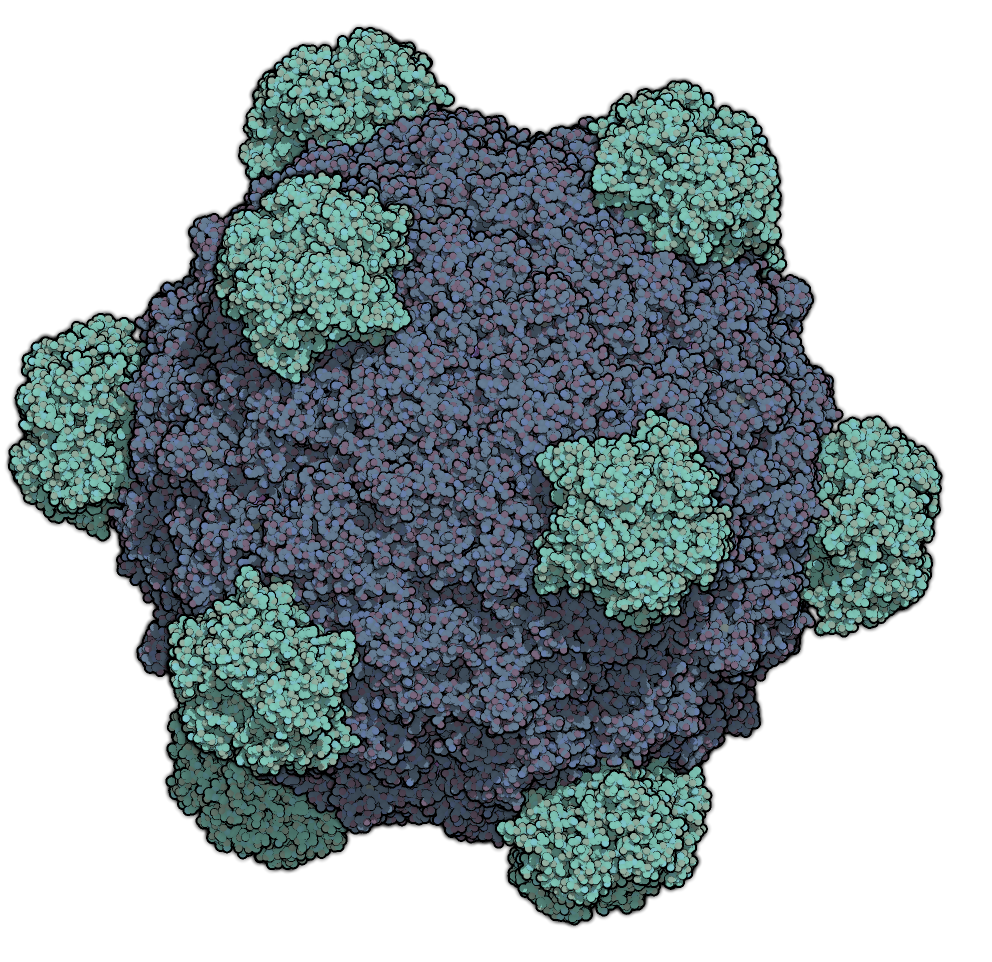
At the heart of this endeavor, the consortium has announced a bold central mission for the coming year: to encode and process an entire genome using a quantum computer. This achievement would be a potential world-first and provide evidence for quantum computing’s readiness for tackling real-world use cases.
Their chosen genome, the bacteriophage PhiX174, carries symbolic weight, as its sequencing his second Nobel Prize for Chemistry in 1980. Successfully encoding this genome quantum mechanically would represent a significant milestone for both genomics and quantum computing.
Sooner than many expect, quantum computing may play an essential role in tackling genomic challenges at the very frontier of human health. The Sanger Institute and ³Ô¹ÏºÚÁÏÍø’s partnership reminds us that we may soon reach an important step forward in human health research – one that could change medicine and computational biology as dramatically as the original Human Genome Project did a quarter-century ago.
“Quantum computational biology has long inspired us at ³Ô¹ÏºÚÁÏÍø, as it has the potential to transform global health and empower people everywhere to lead longer, healthier, and more dignified lives.â€� – Ilyas Khan, Founder and Chief Product Officer of ³Ô¹ÏºÚÁÏÍø
About ³Ô¹ÏºÚÁÏÍø
³Ô¹ÏºÚÁÏÍø, the world’s largest integrated quantum company, pioneers powerful quantum computers and advanced software solutions. ³Ô¹ÏºÚÁÏÍø’s technology drives breakthroughs in materials discovery, cybersecurity, and next-gen quantum AI. With over 500 employees, including 370+ scientists and engineers, ³Ô¹ÏºÚÁÏÍø leads the quantum computing revolution across continents.Â
AI + quantum computing: ³Ô¹ÏºÚÁÏÍø, NVIDIA, and Pfizer have combined transformer-based generative AI with quantum computing to automatically generate high-quality quantum chemistry circuits more efficiently than traditional optimization methods.
Practical pharma impact: The approach was used to prepare molecular ground states and validated on ³Ô¹ÏºÚÁÏÍø’s Helios hardware, demonstrating a path toward larger-scale computational chemistry and drug discovery.
Long-term vision: The team aims to build quantum foundation models that learn from increasingly complex quantum data, eventually enabling AI to design circuits for molecules too large for classical simulation.
�
Quantum computing has long promised a future that expands what we can do with compute — for example, in molecular simulation, materials discovery, or pharmaceuticals development. But between that promise and practical utility sits a stubborn bottleneck: quantum state preparation.
To run any algorithm on a quantum computer, you must first put the qubits in the right starting state. Think of it like setting up a Rube Goldberg machine- except in this case, you’re not sure exactly which initial setup will give you the results you want. This is what makes quantum state preparation so important: your choice of initial state dictates the accuracy and cost of the rest of the calculation.
We teamed up with NVIDIA and Pfizer to tackle this problem, with an eye towards developing meaningful industrial workflows. The result is a new generative quantum AI framework, called ADAPT-GQE, which we consider to be a canonical instance of GenQAI. ADAPT-GQE uses quantum data to train transformer models that ultimately synthesize quantum chemistry circuits faster, with better outcomes, in a sort of ‘virtuous cycle’.
Ultimately, this means we have developed a new interface between quantum computing and AI. By treating quantum circuit generation as a language modelling problem, we now have a system that can generate high-quality ground-state preparation circuits - with comparable or improved state preparation accuracy.
The Magic – and Difficulty – of Computational Chemistry
The goal of computational chemistry is to learn about chemical properties without performing expensive, time-consuming, and sometimes dangerous “wet-lab� experiments.
In principle, you can replace the majority of your physical experiments with computer simulations, saving billions of dollars and years of time.
In reality, computational chemistry is very tricky. To accurately simulate a chemical inside of a computer, you have to build it from the ground up. You start with a collection of atoms (in the case of imipramine, you have 19 Carbon atoms, 24 Hydrogen atoms, and 2 Nitrogen atoms). Then, like Nature’s ‘lego’, you assemble those atoms into a molecule: you set bond lengths, strengths, angles, interactions, and so on.
This is not straightforward: a single molecule can exist in many forms; with different angles, rotations, etc. We will call these different forms ‘conformations’.
Then, to actually estimate chemical properties, or to explore chemical reaction pathways, you have to reproduce the detailed physics that goes on at the atomic level: take your chosen conformation then figure out how each orbital is occupied, how the electrons are interacting with each other or the atomic nuclei, how is the addition of heat or a catalyst going to affect things.... it gets complicated, quickly.
Despite all this, computational chemistry is a powerhouse in pharmaceutical development. Right now, pharmaceutical companies save money and time by simulating as much as they can on computers, avoiding time consuming and expensive laboratory experiments. However, even with ~50 years of development, the existing classical methods have very real limitations.
This is where quantum computing comes in: this new computational paradigm can elide those limitations because it has many of the “hard parts� (like superposition or entanglement) natively encoded. Used correctly, quantum computing promises to break old barriers, further improving margins for pharma companies across the globe while contributing to meaningful, impactful, discoveries.
A Virtuous Cycle: Using Quantum Data to Train AI, Which Then Designs Better Quantum Circuits
While quantum computational chemistry is one of the strongest candidates for near-term quantum advantage, current hardware is still in the earlier stages of development. With limited qubits and error rates, algorithm designers need to make every gate count, keep circuits shallow, and be able to tolerate some level of noise.
This is where generative AI enters the picture.
Instead of hand-designing chemistry circuits and laboriously experimenting to see how well they run, there is another idea: what if we trained an AI to solve the problems that quantum computational chemistry faces?
Using this approach, not only can we save time and resources; but we can shorten the timeline to realize practical results. With better state prep and other circuits, applications that were once considered far in the future come into view.
Our first attempt at this is called ADAPT-GQE. The central idea behind ADAPT-GQE is deceptively simple: instead of laboriously searching for good quantum circuits from scratch, train a transformer model to generate them directly.
Importantly, the framework is model-agnostic, which we showed by deploying it on complementary transformer architectures - (a pretrained LLM) and (trained from scratch).
From Iterative Optimization to Generative Models
The initial goal here is to find the ‘ground state’ of the molecule imipramine (this is the electronic state with the smallest amount of energy stored inside it). To do this, you have to find the right ‘state preparation circuit’, as described above.
Until now, a leading method for finding the ground state with quantum computers was the ‘Variational Quantum Eigensolver (VQE)’, a hybrid quantum-classical approach. The VQE process starts with a ‘guess’ circuit for a particular conformation of the molecule. The quantum computer runs the circuit to measure the associated energy of the molecule. This result is fed back into a classical optimizer that then tweaks the circuit parameters, hopefully resulting in one with a lower molecular energy. This loop repeats until a minimum energy is found.
Unfortunately, VQE has a few severe limitations that make it infeasible for widespread use. The recently proposed ADAPT-VQE was a crucial step forward meant to address some of the issues with “plain� VQE. In ADAPT-VQE, instead of starting with a guess for the initial circuit, the process builds a circuit in steps by selecting operators from a pool(typically using gradient information) and optimizing. This approach can be more effective, but unfortunately still grows too large too quickly.
This is where the joint team jumped in.
Combining the best of all worlds, the team’s new framework, ADAPT-GQE, combines AI with the ADAPT-VQE to create something entirely new – and something that, so far, is a scalable, hardware-validated pathway toward automated quantum circuit synthesis.
First, transformers (in this case, Nemotron and Gemma) are trained via supervised fine-tuning on ADAPT-VQE data. In this way, the old method isn’t thrown away but is instead treated as a high-quality data-producing “oracle�.
Then, once the transformer has been initially trained, it defines a distribution over circuits, each one with some probability of corresponding to the ground state. This distribution can be used in a fine-tuning loop, for example, reinforcement learning. In reinforcement learning, the framework takes a circuit from that distribution, runs it, and measures the energy. It feeds the results back into the transformer, which adjusts its distribution. Over time, the model learns to prioritize circuits that prepare increasingly accurate ground states.
Crucially, reinforcement learning allows the system to surpass its original training data instead of merely imitating it. The model is no longer acting as a compressed lookup table for ADAPT-VQE. It begins exploring novel circuit configurations that may outperform the teacher algorithm itself. This is one of the most important conceptual shifts in the project.
In this case, instead of running all the initial circuits on ³Ô¹ÏºÚÁÏÍø’s Helios, the reinforcement learning circuits were run using NVIDIA accelerated computing and the CUDA-Q platform, simulating a quantum processor.
Finally, once the transformers are optimized via reinforcement learning, the best resulting circuits are validated for accuracy and feasibility, by running them using InQuanto and on ³Ô¹ÏºÚÁÏÍø’s newest hardware, Helios. With InQuanto v5.2, users can now with both the Helios quantum computer and the Selene quantum emulator through Nexus.
This powerful combination of InQuanto and Nexus enabled the execution one of the largest AI-generated quantum chemistry circuits to date on a quantum computer; helping to turn the promise of quantum computing into a practical tool for pharmaceutical development.
Teaching a Transformer
Looking farther in the future, the researchers envision something much larger than a single molecular benchmark.
For bigger and more complex molecules, ADAPT-VQE won’t work in the first place as the initial training “oracle�. In addition, the molecular energy calculations used in the reinforcement learning grow too large for classical systems simulating quantum computers, so the quantum processor becomes essential.
Luckily, this is not a problem. The ultimate goal of the ADAPT-GQE framework is to develop a “curriculum� for the transformers. This means instead of re-training them for every new molecule, you instead keep what you already learned, and expand your knowledge from there.
By initially teaching it on molecules that are smaller, and that can be fully simulated, you ensure it learns on good data that can be double checked using known methods. From there, you can carefully build up the complexity to see how the transformer learns. Eventually, you hope to train it on molecules that can’t be simulated classically, using purely quantum data, all the while getting closer to the complexity levels you’re chasing.
This penultimate result is called a ‘foundation model’, which is a massive AI neural network trained on vast, broad datasets that can be adapted to a wide variety of downstream tasks. In this case, the team is building the very ‘foundations’ of a model that can solve the ‘electronic structure problem’, which is the core computational challenge lying at the heart of quantum (and classical) computational chemistry.
A New Interface Between AI and Quantum Computing
What makes this work particularly interesting is that it treats quantum circuit generation as a language modeling problem: circuits become sequences, transformers learn distributions over those sequences, and reinforcement learning optimizes them against physical reward functions.
The result is an AI system capable of proposing quantum circuits that were never explicitly programmed by humans.
That does not mean generative AI is replacing physics or chemistry. Instead, it is becoming a new interface layer for navigating unimaginably large search spaces that traditional optimization methods struggle to explore efficiently.
For quantum chemistry, that could become transformative.
If successful, frameworks like ADAPT-GQE may eventually allow researchers to synthesize useful quantum circuits for molecular systems too large for classical computation, accelerating everything from materials discovery to pharmaceutical design.
The broader implication is difficult to ignore: foundation models may eventually extend beyond language, images, and code — and into the fabric of physical reality itself.
Recently, industry peers—including ³Ô¹ÏºÚÁÏÍø’s Startup Program Partners and , as well as our partner —published a exploring quantum magnetism that “extends beyond the reach of the state-of-the-art classical methods considered;â€� evidence of a quantum advantage result. Interestingly, the team validated their results on ³Ô¹ÏºÚÁÏÍø machines (both Helios and System Model H2).
In 2025, ), exploring a similar system - also at scales that frustrate classical computation. This got us thinking: with more successes like this in the literature, what does this mean for the ecosystem at large? What are the key lessons to learn from these early demonstrations? And, perhaps most importantly, what’s next?
We Are Entering the Era of ‘What’, Not ‘When’
The answer to the first question, ‘what does this mean for the ecosystem at large’, is a delight to answer. After decades of promises, we are finally in the era where quantum computing is matched with, if not outright exceeding, classical HPC and supercomputing.
Examples of (complexity-theory proven) quantum advantage are already common, usually in the form of . This was extended to , which was one of the earliest commercial applications of quantum computing.
Since then, we have seen a number of results from different groups that push the limits of classical computing while exploring ‘real’ problems; these range from papers exploring (as mentioned above), to papers exploring things like or
Whether or not these are definitively ‘quantum advantage’ results is almost beside the point. They mark a distinct place on the path towards broad scale quantum utility, when quantum computers will be widely useful for researchers and industry alike. More importantly, these papers all speak to a certain level of ‘technological readiness’, showing that quantum computers are now proven to work on problems that are relevant (to some people, at least), at scales that aren’t easily reproduced elsewhere.
Accuracy is a Baseline Requirement Â
One of the key lessons we can learn from all these demonstrations is that hardware accuracy is paramount. Without accuracy, quantum computers are very expensive noise generators, unable to move the needle beyond HPC. Happily, we are finding that current generation machines are still capable of quite a lot, thanks to baseline physical accuracy, optionally coupled with clever error mitigation on top.
In general, we are very pleased to see how error mitigation can significantly reduce the impact of hardware errors and improve the quality of computed results by applying sophisticated post-processing techniques. However, error mitigation is not free. As hardware noise increases, mitigation becomes increasingly computationally expensive, and the techniques themselves can skew the results. If the underlying hardware is insufficiently accurate, it becomes more difficult to distinguish genuine physical phenomena from artifacts introduced via mitigation.
This is precisely where hardware quality matters. The validation on ³Ô¹ÏºÚÁÏÍø systems provided an important independent confirmation that the mitigated results from another vendor reflected real physical behavior rather than bias introduced through the mitigation process. Because ³Ô¹ÏºÚÁÏÍø's hardware operates with substantially lower native error rates, it served as a high-confidence reference point for validating scientific results. Importantly, this validation was about confirming the underlying physics, not validating a claim of quantum advantage.
Hardware Accuracy Improves Computational Efficiency
All the above reflects our systems' strong native performance: when hardware begins with exceptionally high fidelity, there is simply less error to overcome. However, error mitigation remains an interesting and valuable approach: high-quality hardware establishes the baseline, and software extends what is possible.
However, native accuracy affects more than scientific confidence—it also influences computational efficiency. As program complexity and size increases, hardware error rates increase, and successful error mitigation generally requires more sampling, more processing, and more computational resources. The lower the physical fidelity, the greater the overhead required before arriving at trustworthy results.
By starting with significantly lower native error rates, ³Ô¹ÏºÚÁÏÍø systems reduce the amount of mitigation needed to achieve comparable scientific outcomes. This creates a practical advantage in computational cost while helping to preserve confidence in the resulting data.
Accuracy is the Foundation for Fault Tolerance
Finally, we can answer the question of what comes next. This may seem obvious, but it’s multifaceted. What’s next is large-scale fault tolerant quantum computing. But the real question is, what does that look like?
A truly large-scale fault tolerant quantum computer will operate with error correction embedded into the workflow, working on the ‘logical’ level. That means that programmers will write their code to operate on logical qubits, with all the mechanisms of error correction hidden under the hood. The result will be error rates low enough to run some truly behemoth workflows.
We are well along the path to realizing this : we have demonstrated , have world-leading , and have a platform as they are invented; a crucial advantage in a quickly-evolving landscape. All of this is enabled by our high native accuracy; the accomplishments listed would be impossible without hardware that wasn’t ultra-low error to begin with.
However, even with the full force of error correction, error mitigation may still play an important role in the post fault-tolerance era. While error correction will be applied broadly to all workflows, there will still be some special cases where error mitigation may stretch the hardware further, always ensuring we stay on our front foot as computational power grows.
Progress Is the Real Milestone�
Scientific breakthroughs matter because they move the field forward. But lasting enterprise value will come from quantum computers that consistently deliver results organizations can trust.
With Helios—the world's most accurate commercial quantum computer[1]—and a growing ecosystem of partners building complementary technologies, ³Ô¹ÏºÚÁÏÍø is creating the accurate, scalable foundation needed to transform scientific achievements into practical quantum computing.
[1] Based on two qubit gate fidelity, as of December 31, 2025.
- Mitsui & Co. and Mitsubishi Electric demonstrated one of the world’s largest approximate Quantum Fourier Transforms (QFT) on ³Ô¹ÏºÚÁÏÍø Helios, scaling from prior records to 98 physical qubits.
- The collaboration also implemented a logical QFT using a QEC (Quantum Error Correction) code with up to 12 logical qubits.
- The work highlights ³Ô¹ÏºÚÁÏÍø’s accuracy and flexible architecture.
While there is ongoing debate around the pace of quantum computing’s development, a more grounded way to assess progress is through concrete demonstrations of foundational algorithms at meaningful scale. In this context, Mitsui & Co. and Mitsubishi Electric are taking a pragmatic view of quantum progress—focusing on how close the field is to executing core algorithmic primitives that underpin many potential industrial applications, rather than relying on abstract milestones or timelines.
, the industrial giants teamed up with ³Ô¹ÏºÚÁÏÍø to measure how close we are to running the Quantum Fourier Transform (QFT), a widely-used algorithmic primitive, at scales necessary for industrial applications. In the process, the team successfully ran one of the largest instances of the approximate QFT ever demonstrated. This achievement matters because the QFT is an essential primitive that underpins many of the quantum algorithms expected to deliver practical advantages.
You may have heard of the (classical) Fourier transform (FT), due to its ubiquity throughout modern computing. The FT is essential in everything from image analysis to data compression, with almost limitless applications in between. The quantum Fourier transform (QFT) is similar; it’s used in everything from chemistry to finance.
Because the QFT is a foundational primitive underpinning many quantum algorithms, demonstrating it at larger scales and higher fidelity is a practical way to measure quantum computing readiness. This is exactly the type of benchmarking that organizations should consider to understand where today’s systems are useful, and to see how fault-tolerant approaches are progressing. Ultimately, algorithm-level benchmarking like this is one of the most useful ways to understand not just where we are, but where we are going.
A Transformative Approach
Primitives like Fourier Transform are so widespread because they simplify problems by transforming them into something that is easier to deal with. At ³Ô¹ÏºÚÁÏÍø, not only are they crucial for industrial applications but they can also simplify algorithms, making them possible to run now instead of later. This ‘transformational’ approach extends beyond the QFT - other transforms exist, and we have even invented our own quantum-native transforms.
Using our Helios quantum computer and Guppy language, the joint team explored running the QFT on both physical qubits and on logical qubits, showing that fault tolerance is progressing quickly. Â Running the QFT on 98 physical qubits; the paper shows a clear progression from previous results.
Then, using the Steane code, one of the best-studied quantum error correcting codes, the team used Helios’ 98 physical qubits to form 12 logical qubits, successfully running the QFT with the mechanisms of quantum error correction interwoven into the algorithm. This marks a crucial step forward for the field.
Foundational Progress
Taken together, these results provide a more concrete lens through which to view progress in quantum computing: not as abstract projections, but as measurable advances in the execution of foundational algorithms at increasing scale. By benchmarking the Quantum Fourier Transform on both physical and logical qubits, Mitsui & Co. and Mitsubishi Electric are helping to clarify what today’s hardware can already achieve, and where fault-tolerant approaches begin to extend those limits.
More broadly, the organizations best positioned to benefit from quantum computing will be those that focus on these foundational capabilities early, and use them to build a clear, evidence-based understanding of how the technology fits into their business goals.